A facade leak is often treated as a product-selection problem. The investigation starts with the sealant cartridge: silicone, polyurethane, hybrid polymer, high modulus, low modulus, premium grade.
That is usually the wrong starting point.
In many failures, the chemistry is capable of performing. The joint is not.
A movement joint that is too narrow, too deep, contaminated, exposed to uncalculated thermal movement or bonded on three sides can defeat a high-performance sealant before the material reaches the end of its expected service life. The result is a familiar dispute: the contractor points to the product data sheet, the oversight body points to the leaking interface, and the owner inherits the cost.
The correct forensic question is not, “Was a premium sealant used?”
It is:
Was the joint designed, prepared, installed and verified as a movement-capable water-management system?
Problem: When the Sealant Becomes the Scapegoat
Facade joints are where different materials, trades and tolerances converge. Concrete meets aluminium. Glass meets a frame. Render meets a window perimeter. Cladding panels move independently under solar exposure, structural deflection, moisture variation and construction tolerances.
The sealant is expected to accommodate that movement while maintaining adhesion, cohesion and resistance to water penetration.
On projects in Dubai, Singapore and the UK, the exposure profile is particularly demanding:
- Dubai introduces intense solar loading, high ultraviolet exposure, dust contamination and significant surface-temperature variation.
- Singapore combines high humidity, frequent rainfall, biological contamination and persistent moisture at interfaces.
- The UK presents repeated wetting and drying, wind-driven rain, lower substrate temperatures and seasonal movement.
The same joint detail may therefore experience materially different demands depending on orientation, shading, substrate composition and installation timing.
The recurring failure pattern is predictable. A narrow joint is filled with a high-movement sealant. A deep bead is installed without effective backing. Substrates are dusty, damp or coated with laitance. The joint is tooled poorly and begins to pond water. Months later, the sealant debonds or splits.
The project team then blames the sealant.
That is the sealant fallacy.
Forensic Analysis: Geometry Controls Strain
Sealant movement capacity is expressed as a percentage of the original joint width. A product classified for ±25% movement does not mean it can absorb unlimited movement. It means the sealant is expected to accommodate a defined proportion of its original width under the relevant test conditions.
A 2 mm movement demand in a 10 mm joint represents 20% movement. The same 2 mm demand in a 6 mm joint represents approximately 33% movement. The chemistry has not changed. The strain demand has.
This is why joint width must be calculated from actual movement, not selected from architectural appearance or the available nozzle size.
Assess the following:
- Thermal expansion and contraction of adjoining materials.
- Structural deflection and inter-storey movement.
- Construction tolerances and expected dimensional variation.
- Moisture-related movement where porous materials are involved.
- Movement during the sealant curing period.
- The number and frequency of movement cycles expected during service.
Then size the joint with sufficient margin. A nominal movement class is not a substitute for movement analysis.
Width-to-Depth Ratio
Facade joints commonly require a controlled width-to-depth relationship. A practical target is approximately 2:1: the sealant joint is wider than it is deep.
A joint that is 20 mm wide may require approximately 10 mm of sealant depth, subject to the approved system design and manufacturer requirements.
Over-deep sealant increases restraint and reduces the joint’s ability to deform efficiently. An under-wide joint concentrates movement into a small volume of material. Both conditions increase stress at the bond line.
Install a compatible compressible backing material to control depth and prevent the sealant from bonding to the rear of the joint. Where backing cannot be used, specify an appropriate bond-breaker arrangement.
The sealant should normally bond to the two opposing joint faces only. Three-sided adhesion creates restraint. Instead of flexing through the intended sealant profile, the material becomes locked into the joint. Under movement, it can tear internally or pull away from the substrate.
Adhesion Failure Versus Cohesion Failure
These failures are not interchangeable.
Adhesion failure occurs when the sealant separates from the substrate. The bond interface may have been weakened by dust, moisture, laitance, old sealant residue, release agents, incompatible coatings or inadequate priming.
Cohesion failure occurs when the sealant tears through its own body. This may indicate excessive movement, incorrect geometry, premature movement during curing, incompatibility or a material that has degraded under exposure.
The distinction matters because the repair strategy differs. Replacing a debonded joint with a more expensive chemistry will not correct a contaminated substrate. Re-priming a joint will not correct a movement demand that exceeds the available geometry.
Investigate the failure mode before specifying the repair.

Surface Preparation Is a Structural Control
Sealant adhesion is only as reliable as the surface beneath it.
Prepare each substrate according to its condition and compatibility. Remove:
- Dust and loose particles.
- Oil, grease and processing residues.
- Cement laitance and weak surface layers.
- Old sealant and adhesive residue.
- Free water and uncontrolled moisture.
- Incompatible coatings or water-repellent treatments.
Concrete and masonry may require mechanical preparation to expose a sound surface. Metal and glass may require controlled cleaning using compatible methods. Porous or difficult substrates may require a primer. Do not treat primer as a substitute for cleaning.
Record substrate condition, cleaning method, primer batch, application time, weather conditions and sealant batch. In a dispute, undocumented preparation is difficult to defend.
The installation sequence also matters. Protect prepared joints from dust, rain, condensation and subsequent trade contamination. Do not permit sealing to become the final rushed activity before handover.
Standard Reference: What the International Standards Actually Control
ASTM C1193
ASTM C1193, Standard Guide for Use of Joint Sealants, provides guidance on joint design, backing materials, primers, substrate preparation, installation and failure mechanisms.
Use it as a design and execution framework. Do not reduce it to a product-selection reference.
It reinforces a critical principle: a sealant joint is a system comprising the sealant, substrates, backing, bond interfaces, geometry, installation conditions and expected movement.
ISO 11600
ISO 11600 classifies building construction sealants according to application, performance characteristics, movement capability and modulus.
Use the classification to match the sealant to the design requirement. Do not treat the classification as evidence that the joint itself is correctly designed.
A product can satisfy an ISO movement class while still failing in an undersized, contaminated or badly detailed joint.
AAMA 800 Series
The AAMA 800-16 series provides fenestration-focused specifications and test methods for sealants, compounds and tapes used with windows, doors and curtain wall interfaces.
Apply the relevant AAMA 800 requirements where perimeter sealing and fenestration interfaces are involved. Confirm compatibility between the sealant, frame finish, glazing materials, membranes and adjacent coatings.
ASTM C1401
Use ASTM C1401 for structural sealant glazing applications. Structural glazing introduces a different level of consequence because the sealant may contribute to load transfer as well as weather protection.
Do not treat a weather sealant detail and a structural glazing bond as equivalent applications. Require the correct design review, compatibility assessment, adhesion testing and installation controls for the system being used.
Audit Engagement Models: Why Timing Changes the Outcome
A final-stage leak inspection is often the least effective audit model. By that stage, the joint may be concealed, contaminated or difficult to reconstruct. The investigation becomes adversarial because each party is defending a completed installation.
A progressive engagement model is more effective:
- Review the design intent before installation.
- Verify joint width, depth and backing arrangement at representative locations.
- Approve substrate preparation and primer procedures.
- Inspect the first completed joints before production continues.
- Record environmental conditions and curing protection.
- Conduct targeted adhesion and compatibility checks.
- Complete water-management verification before concealment.
This approach reduces friction between contractors and oversight bodies. It converts compliance from a final opinion into a documented chain of evidence.
For medium to high-end residential construction, this is where building consultancy services and construction risk management services provide measurable value. It is also relevant to a homeowner engaging a home renovation consultant, a construction lawyer requiring technical evidence, or a building dispute consultant assessing whether the claimed defect is a product failure or an installation failure.
Actionable Fix: Specify the Joint, Not Just the Product
Implement the following controls before approving facade sealant works:
- Calculate expected thermal, structural and construction movement.
- Select a sealant classification that matches the calculated demand.
- Size the joint to control strain, not merely to suit appearance.
- Target an appropriate width-to-depth ratio.
- Install backing to prevent three-sided adhesion.
- Tool the sealant to shed water and avoid surface depressions.
- Define substrate cleaning, drying and priming requirements.
- Confirm compatibility across concrete, masonry, glass, metals, coatings and membranes.
- Control movement during curing.
- Inspect early work before production sealing proceeds.
- Photograph concealed conditions and retain batch records.
- Distinguish adhesion failure from cohesion failure during forensic investigation.
- Never rely on a single sealant bead as the entire facade water-management strategy.
The premium product is only one variable. Joint geometry, movement capacity, surface preparation and installation control determine whether the chemistry is given a fair opportunity to perform.
Shoal Bay Projects operates as a forensic advisory bridge between design intent, site execution and construction compliance. The objective is not to create another layer of inspection. It is to identify the failure vector early enough to prevent a minor interface defect from becoming a legal, operational or financial disaster.
Continue the discussion through the Hive YouTube channel.
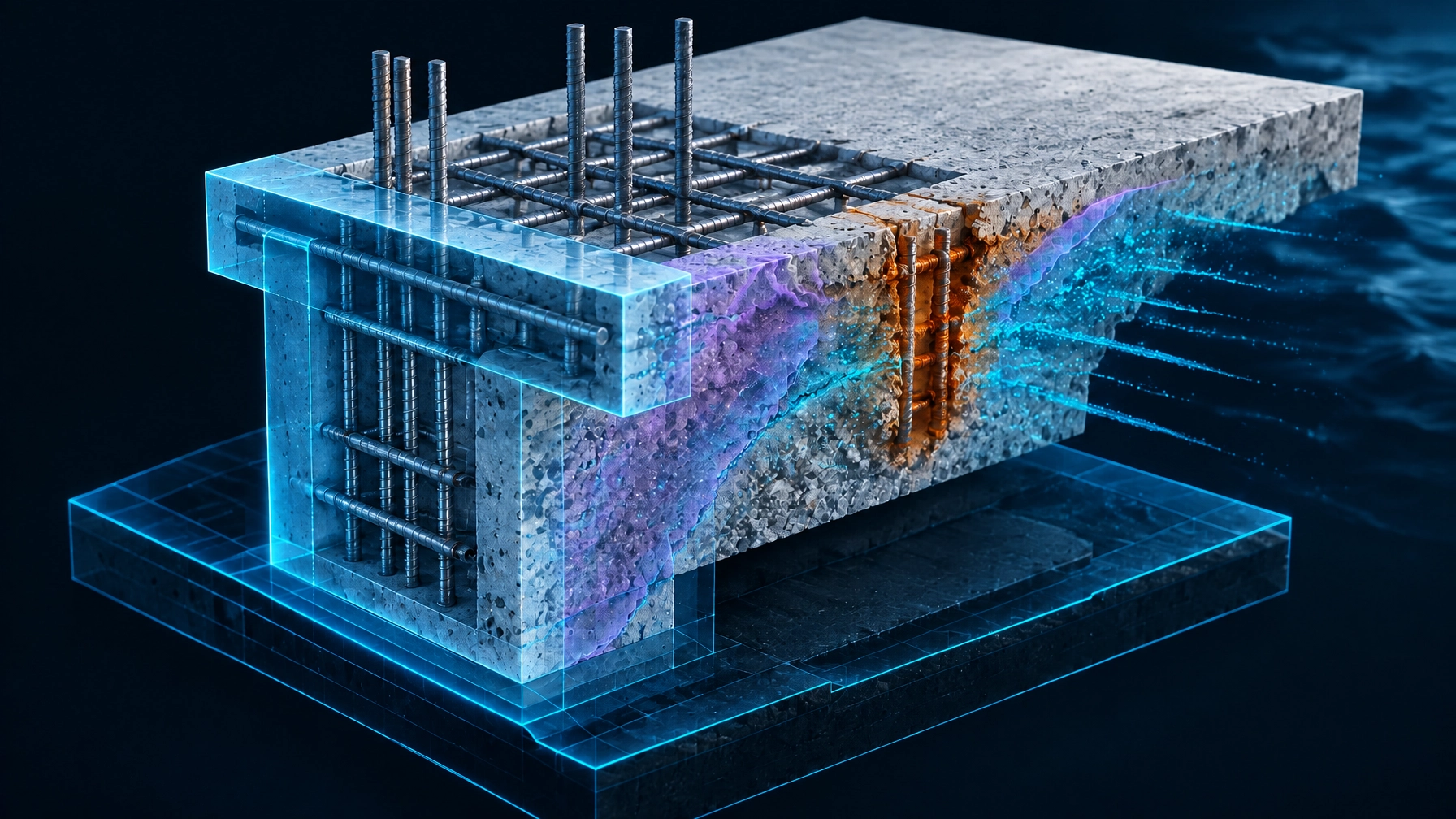
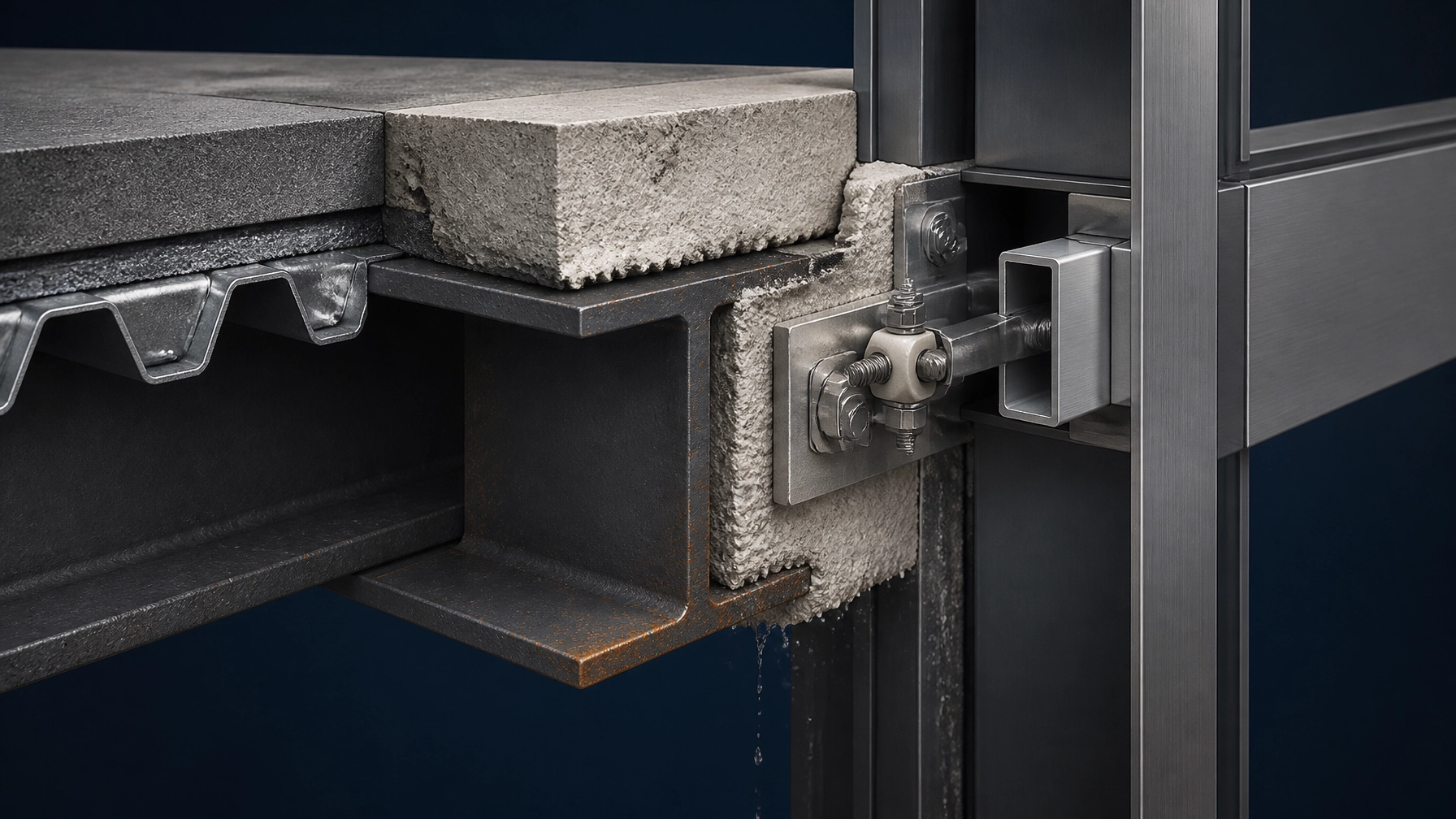
⚠️ The image in this post is used for illustration purposes only, designed to encourage thoughtful discussion. It is not intended to represent a prescriptive detail of any installation or construction method.
Claim Your Foundation Membership
The Vault. The App. The Community. We're opening the doors to a select group of Foundation Members : free, for a limited time. Foundation Membership includes full access to The Vault (our forensic intelligence archive) and early access to the Hive app.
Once the charter window closes, this tier is gone permanently. Foundation Members retain access for life. This is not a trial : it's a permanent invitation to the founding cohort.
Claim Your Foundation Membership →
Circle-Ready Pack
Community Introduction
A facade joint rarely fails because the sealant brand was not expensive enough.
It usually fails because the joint was too narrow, too deep, poorly prepared or exposed to movement that was never properly calculated. This article examines the sealant fallacy and the forensic controls that matter across hot, humid and wet global environments.
Article
The Sealant Fallacy: Why Joint Geometry, Movement Capacity and Surface Preparation Outrank Chemistry in Facade Water Management
Full article: Shoal Bay Projects
Key Forensic Takeaways
- Match joint width to actual thermal, structural and construction movement. A movement classification cannot compensate for an undersized joint.
- Control sealant geometry with backing and two-sided adhesion. Over-deep joints and three-sided bonding create avoidable stress concentrations.
- Treat surface preparation as a compliance control. Dust, moisture, laitance, old sealant and incompatible coatings can defeat premium chemistry.
Image Assets
Explore further through the Hive YouTube channel.
⚠️ The image in this post is used for illustration purposes only, designed to encourage thoughtful discussion. It is not intended to represent a prescriptive detail of any installation or construction method.
Claim Your Foundation Membership
The Vault. The App. The Community. We're opening the doors to a select group of Foundation Members : free, for a limited time. Foundation Membership includes full access to The Vault (our forensic intelligence archive) and early access to the Hive app.
Once the charter window closes, this tier is gone permanently. Foundation Members retain access for life. This is not a trial ; it's a permanent invitation to the founding cohort.
Claim Your Foundation Membership →